Guatemala Coffee Flavor Profile: Single-Origin vs. Blends

If you've ever asked "what does Guatemalan coffee taste like?", the honest answer is: it depends on where in Guatemala it's from.
That's what makes single-origin Guatemalan coffee so worth understanding. This isn't a single flavor. It's eight distinct regional profiles shaped by volcanic soil, altitude, rainfall, and processing method. Each region produces something genuinely different in the cup.
Here's the complete breakdown, region by region, roast by roast, and how it all compares to blended coffee.
What Guatemalan Coffee Tastes Like: The Core Profile
Across all regions, authentic Guatemalan coffee shares a recognizable foundation:
-
Body: Medium to full — satisfying weight in the mouth without heaviness
-
Acidity: Bright and wine-like, particularly in highland-grown beans
-
Base notes: Chocolate and caramel, from milk chocolate sweetness to deep cocoa
-
Finish: Clean and lingering, often with fruit or floral accents by region
-
Sweetness: Natural — reducing or eliminating the need for added sugar
This profile develops because Guatemala's coffee grows at 4,600–6,500 feet above sea level in volcanic soil rich with minerals. The high altitude slows bean maturation, allowing sugars to concentrate fully. That's why Guatemalan coffee has natural sweetness and complexity that lower-altitude origins simply can't replicate.
Guatemala grows almost exclusively Arabica, specifically the Strictly Hard Bean (SHB) classification, meaning beans are grown above 4,500 feet. This altitude requirement is a quality gateway. Specialty-grade Guatemalan farms regularly score 85–90+ on the Specialty Coffee Association's 100-point scale. That's not marketing language, it's a measurable, audited standard most commercial blends don't meet.
What "Specialty Grade" Actually Means for Guatemalan Coffee
The global coffee market uses a standardized scoring system administered by professional tasters. A score of 80+ qualifies as specialty grade. Below 80 is commercial grade, what fills most supermarket shelves and powers most blends.
Guatemala's best farms consistently hit 85–90+. What drives those scores:
-
Volcanic soil: Active and dormant volcanoes, Fuego, Agua, Acatenango, deposit mineral-rich ash into the growing areas. Nitrogen and other minerals absorbed by the coffee plants translate directly into flavor complexity and depth that flat-land regions can't replicate.
-
Altitude-driven density: The higher the altitude, the denser the bean. Denser beans extract more evenly, produce better crema in espresso, and deliver more consistent flavor across brewing methods.
-
Strict processing standards: Guatemalan exporters adhere to rigorous quality controls. Only beans that meet the SHB standard leave the country under specialty designation.
-
100% Arabica: No Robusta filler. Arabica produces the bright acidity and aromatic complexity that defines great coffee. Robusta contributes caffeine and crema but little of the flavor dimension Arabica offers.
Learn more about what makes specialty coffee different →
Regional Flavor Profiles: A Full Guide
Guatemala has eight distinct coffee-growing regions. Each one produces beans with a genuinely different personality. Here's what to expect from each.
Antigua
Flavor: Rich chocolate, subtle spice, gentle smokiness, full body Character: One of Guatemala's most recognized and approachable profiles. Surrounded by three volcanoes, the soil is exceptionally mineral-rich and the climate unusually consistent. The result is a coffee that's complex but never challenging, a reliable daily drinker that rewards attention. Best for: Espresso, French press, everyday drinking, first-time Guatemalan coffee buyers
Huehuetenango
Flavor: Bright and intensely fruity, stone fruit, peach, dried berries, with crisp acidity and floral notes Character: Guatemala's most remote high-altitude region. Dry, hot winds from Mexico's Tehuantepec plain protect the coffee from frost at elevations other regions can't sustain. The result is some of Guatemala's most distinctive and adventurous cups. Best for: Pour-over, filter coffee, light-to-medium roast lovers, specialty coffee enthusiasts
Antigua vs. Huehuetenango: The Key Difference
Think of it this way: Antigua is the chocolate lover's Guatemala. Huehuetenango is the fruit lover's Guatemala. Antigua is rich, rounded, and immediately satisfying. Huehuetenango is bright, complex, and layered. If you're new to single-origin Guatemalan coffee, start with Antigua. If you want to explore its outer limits, go to Huehuetenango.
See our full Antigua vs. Huehuetenango comparison →
San Marcos
Flavor: Tropical fruit notes, vibrant acidity, medium body, light floral hints Character: Guatemala's rainiest region. Higher rainfall accelerates cherry development and intensifies the fruit character. Beans from San Marcos have a brightness and tropical quality distinct from the rest of the country. Best for: Iced coffee, cold brew, light-to-medium roasts Our Mayan Power is single-origin San Marcos, the most fruit-forward coffee in our range.
Atitlán
Flavor: Citrus and chocolate in balance, with spice complexity and medium-full body Character: The volcanic soil surrounding Lake Atitlán is some of the most mineral-rich in the country. Produces a distinctive balance of brightness and depth that many specialty buyers seek out specifically. Best for: Pour-over, Chemex, anyone who loves a balanced cup with complexity
Cobán
Flavor: Subtle fruit, gentle medium body, mild sweetness, the most approachable profile in Guatemala Character: Constant cloud cover and humidity create a cooler, slower growing environment producing softer, more delicate flavors. Lower acidity than most Guatemalan regions. Best for: Those new to specialty coffee or sensitive to acidity
Acatenango Valley
Flavor: Complex, wine-like qualities, bright acidity, mineral depth Character: Volcanic slopes at very high elevation. Relatively small production makes these beans rarer but consistently exceptional when available. Best for: Specialty coffee enthusiasts who want something distinctive
Nuevo Oriente
Flavor: Balanced acidity, chocolate notes, berry hints, exceptionally smooth finish Character: Moderate rainfall and humidity in Guatemala's eastern region create ideal, consistent growing conditions. Less dramatic than Huehuetenango but reliably excellent. Best for: Everyday drinking, those who want balance without brightness
Fraijanes Plateau
Flavor: Elegant acidity, substantial body, pronounced caramel sweetness Character: Soil continuously enriched by nearby volcanic activity. Produces one of Guatemala's sweetest natural flavor profiles without any processing tricks. Best for: Those who want sweetness and body together

The honest take: blends aren't inferior — they serve a different purpose. A well-crafted blend delivers consistency that's genuinely useful for high-volume cafés or people who simply want reliable flavor without seasonal variation.
But if you've never tasted single-origin Guatemalan coffee, you're missing a flavor dimension that blends specifically remove by design. When you drink a single-origin San Marcos, you're tasting the exact influence of that region's rainfall on that year's harvest. No blend can do that.
How Guatemalan Coffee Compares to Other Origins

Guatemala is the origin for buyers who want complexity and traceability. Colombia is for consistency. Ethiopia for aromatics. Brazil for espresso blending.
The People Behind the Beans
Guatemala's coffee tradition runs deeper than soil and altitude. Mayan farming communities have cultivated these volcanic highlands for generations, passing down cultivation knowledge that modern agronomy is still learning from. The respect for the land embedded in traditional Mayan farming practices, shade-grown cultivation, hand-sorting, minimal chemical intervention, produces naturally cleaner, more complex beans.
Many of our partner farms operate as women-led cooperatives, a significant and growing force in Guatemala's highland coffee economy. In many rural communities, women manage the harvest, processing, and quality decisions from cherry to export. Supporting these producers through direct-trade relationships means the premium paid for specialty coffee reaches the people who actually grew it, not intermediaries.
This ethical dimension isn't separate from the flavor story, it's part of it. Farms where workers are fairly compensated and land is respected long-term produce better coffee. Every cup of authentic Guatemalan single-origin coffee reflects that chain of care.
Learn more about ethical coffee sourcing →
How to Bring Out the Best Flavors
The flavor profile above assumes proper brewing. These four things make the biggest difference:
Roast level: Medium to medium-dark roasts preserve Guatemalan coffee's acidity and fruit notes while developing chocolate and caramel body. Dark roasts mask the regional character you're paying for. For Huehuetenango specifically, a lighter roast unlocks the floral and fruit notes.
Brewing method: Pour-over (V60 or Chemex) best highlights bright acidity and complexity. French press brings out full body and chocolate notes. Espresso showcases rich crema and bold flavor, Antigua-region beans are particularly well-suited.
Grind fresh: Volatile aromatic compounds begin escaping immediately after grinding. Buy whole bean. Grind just before brewing. This single step preserves more of the regional character than any other variable you can control at home.
Water temperature: 195–205°F (90–96°C). Too hot extracts bitter compounds; too cool leaves flavor in the grounds.
Full brewing guide by method →
Our Direct-Trade Single-Origin Guatemalan Coffees
All sourced direct from small highland farms. Roasted fresh in small batches. Ships within 3–5 days of roasting.
-
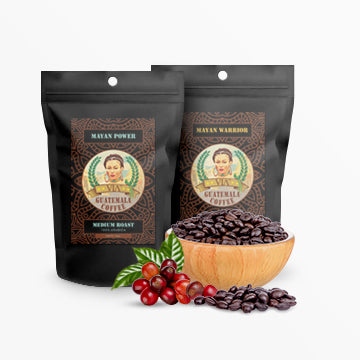
Mayan Warrior — Medium Roast: Rich chocolate base, balanced acidity, naturally sweet finish. Our most popular — works beautifully across all brewing methods. Best starting point for single-origin Guatemalan coffee.
-
Mayan Power — San Marcos Medium Roast: Vibrant tropical fruit notes from Guatemala's rainiest highland region. Standout for pour-over and iced coffee.
-
Mayan Jaguar — Dark Roast: Full body, bold and deep, low acidity. Guatemala's richness without the brightness. Best for espresso and French press.
-
Mayan Cardamom — Spiced Medium Roast: 98% single-origin Guatemalan Arabica, 2% premium cardamom seeds. A completely unique flavor experience, no measuring required.
-
Two-Bag Bundle — Save $15: Choose any two bags from the collection. The best way to compare regional profiles side by side.
Not sure where to start? Mayan Warrior is the most approachable entry point. Browse the full collection →
Frequently Asked Questions
What does Guatemalan coffee taste like?
Guatemalan coffee typically has a medium to full body, bright wine-like acidity, and natural chocolate and caramel notes with a clean finish. The exact flavor varies significantly by region, Antigua beans lean toward rich chocolate and spice, Huehuetenango toward fruit and florals, San Marcos toward tropical brightness.
What is the difference between Antigua and Huehuetenango coffee?
Antigua is rich, chocolatey, and full-bodied, grown surrounded by three volcanoes in very consistent conditions. Huehuetenango is brighter, fruitier, and more complex, grown at extreme altitude in Guatemala's most remote region. Antigua is the more approachable of the two; Huehuetenango rewards adventurous palates.
Is Guatemalan coffee single-origin?
It can be. Single-origin means the beans come from one specific farm or region within Guatemala. Many commercial coffees use Guatemalan beans as part of a blend without disclosing the source. Buying from a direct-trade roaster guarantees authentic single-origin sourcing with full traceability.
What is blended coffee?
A coffee blend combines beans from multiple origins, often two to five different countries or regions, to achieve a specific flavor profile or year-round consistency. Blends are designed to taste the same regardless of harvest season. The trade-off is that the distinct character of any single origin gets averaged out.
Is Guatemalan coffee good for espresso?
Yes. Guatemalan coffee, particularly medium-dark roast Antigua-region beans, produces excellent espresso with rich crema, chocolate notes, and enough body to hold up in milk-based drinks. See our full espresso beans guide →
What makes Guatemalan coffee different from Colombian coffee?
Guatemalan coffee has more pronounced acidity, stronger chocolate notes, and more dramatic regional variation. Colombian coffee is known for consistent, balanced, mild approachability. Colombia is the reliable everyday origin; Guatemala is the complex specialty origin.
Why does single-origin coffee cost more?
Single-origin coffee is limited by harvest season and farm output, requires stricter quality auditing, and commands a transparency premium, you know exactly where it came from and who grew it. Direct-trade sourcing further adds cost because it bypasses intermediaries and pays farmers directly rather than at commodity rates.