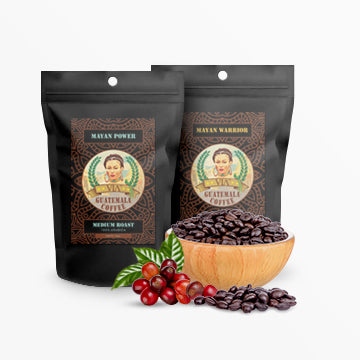
Guatemalan Coffee Grades: SHB, HB, EP Explained (2026)

Guatemala is a titan in the world of specialty coffee. From the ash-rich slopes of Antigua to the high-altitude peaks of Huehuetenango, this Central American country produces some of the most complex, chocolatey, and vibrant beans on the planet. But when you browse the shelves of your local roaster or scroll through an online shop, you’re often met with a confusing alphabet soup of acronyms.
What does "SHB" actually mean for your morning cup? Is "EP" a mark of flavor or just a technicality? Understanding Guatemalan coffee grades is the secret to moving from "buying a bag of coffee" to "investing in a flavor experience."
In this guide, we will demystify the Guatemalan coffee grading system. We’ll break down the meaning of SHB, HB, and EP, explain how altitude shapes the bean in your hand, and provide expert recommendations on which grades best suit your brewing style and budget.
What Makes Guatemalan Coffee Unique?
Before we dive into the technicalities of grading, we have to look at the "why" behind the quality. Guatemala isn't just another coffee producer; it is a land of extreme diversity.
Volcanic Soil and Microclimates
Guatemala is home to over 30 volcanoes, many of which are still active. This means the soil is packed with minerals like phosphorus and potassium, which are essential for healthy coffee cherry development. Furthermore, the country is divided into eight distinct coffee-growing regions, each with its own microclimate.
Altitude and Flavor
The terrain in Guatemala rises sharply from sea level to over 4,000 meters. Most of the best coffee grows between 1,200 and 2,000 meters. This altitude, combined with cool nights and consistent rainfall, slows down the maturation process of the coffee cherry. A slower-growing cherry results in a denser bean packed with more sugars and complex acids.
The Classic Profile
While regional differences exist, Guatemalan coffee is famous for its "balanced" profile. You can generally expect a medium to full body, bright citrus acidity, and deep notes of chocolate, caramel, and spice.
How Guatemalan Coffee Grading Works
In many industries, "grading" is a subjective measure of beauty. In the coffee world, however, the Guatemalan coffee grading system is a highly regulated technical process.
Who Controls the Standards?
Guatemala's National Coffee Association (Anacafé) oversees the country's coffee grading standards, ensuring consistency across exports and domestic sales.
Unlike some countries that grade primarily by bean size or defect count, Guatemala's system focuses heavily on altitude. The reasoning is straightforward: higher elevation typically produces denser, harder beans with more concentrated flavors.
The main factors in Guatemalan coffee grading include:
The Primary Grading Factors
Guatemalan coffee is graded based on four main pillars:
Altitude of cultivation – The primary determinant of grade classification. Higher elevation equals higher grade.
Bean density – Beans grown at higher altitudes develop greater density due to slower maturation, which correlates with better flavor extraction during brewing.
Bean size – While not the primary factor, larger beans generally indicate better growing conditions and are sorted accordingly.
Defect sorting – Additional classifications like EP indicate extra processing to remove defective beans and foreign matter.
Processing quality – How carefully the coffee was washed, dried, and milled affects the final grade.
This multi-factor approach makes Guatemalan coffee grades more informative than simple size-based classifications used in other origins.
Guatemalan Coffee Grade System Explained
When you see a label on a bag of Guatemalan beans, the most prominent letters are usually SHB, HB, or EP. Here is what they actually signify.
SHB (Strictly Hard Bean)
SHB represents the highest altitude classification for Guatemalan coffee, and you'll see this grade on most premium specialty coffees from the country.
-
Definition: To earn the SHB label, the coffee must be grown at an altitude of 1,350 meters (4,400 feet) or higher.
-
Altitude Requirements: These are the highest elevations used for commercial coffee production in the country.
-
Flavor Characteristics: Because the air is thinner and cooler at these heights, the beans grow slowly and become incredibly dense. This density translates to high acidity, complex aromatic oils, and a "clean" finish. You’ll often taste bright fruit notes like green apple or berries alongside a rich chocolate base.
-
Why It Is Premium: Higher altitude means lower yields and harder harvesting conditions, but the flavor complexity is unparalleled.
-
Recommended Brewing Methods: SHB beans shine in Pour-overs (V60, Chemex) and AeroPress, where the clarity of the roast can be fully appreciated.
HB (Hard Bean)
Hard Bean represents the second tier in Guatemala's altitude-based grading system, offering excellent quality at a more accessible price point.
-
Definition and Altitude: HB coffee is grown between 1,200 and 1,350 meters (3,900 to 4,400 feet).
-
Flavor Comparison: While still high-quality, HB beans are slightly less dense than SHB. The acidity is more muted, and the body may feel slightly lighter. It is a very balanced, approachable coffee.
-
Price and Quality: HB is usually more affordable than SHB, making it a favorite for coffee shops looking for a high-quality house blend or espresso base.
EP (European Preparation)
EP is not an altitude classification—it's a quality designation that can apply to any grade, including SHB or HB. You will often see "SHB EP" on a bag. While SHB refers to the growth, EP refers to the sorting.
-
Meaning of EP: "European Preparation" signifies that the raw green coffee beans have been sorted to a very high standard.
-
The Sorting Process: Specifically, it means the beans have been hand-sorted (or mechanically sorted with high precision) to ensure that no more than 8 defects are found per 300 grams of coffee.
-
Quality Impact: EP doesn't change the flavor profile inherent to the bean's altitude, but it ensures a "clean" cup. Fewer defects mean fewer "off-tastes" like sourness or bitterness caused by moldy or damaged beans.
Other Grade Terms to Know
-
Extra Prime: Grown between 900 and 1,100 meters. These are generally considered "commercial grade" and are used in large-scale supermarket blends.
-
Prime: Grown between 750 and 900 meters. These are entry-level coffees with very low acidity and simple flavor profiles.
-
Regional Designation: In Guatemala, the region is often treated as a "grade" itself. For example, "Antigua Pastoral" or "Huehuetenango SHB" carry weight because the specific geography guarantees a certain quality level.
How Coffee Grades Affect Flavor and Price
The relationship between grade, flavor, and price follows predictable patterns once you understand the underlying factors.
Altitude vs. Flavor Complexity
It is a simple rule: The higher the altitude, the more complex the flavor. At high altitudes (SHB), the plant is under a small amount of "stress," which forces it to put more energy into the seed (the bean). This results in more phosphoric and citric acid development. Lower altitude coffees (Prime/Extra Prime) tend to be earthy, nutty, and one-dimensional.
Density vs. Brewing Performance
Harder beans (SHB) can withstand higher temperatures during roasting and brewing. If you are a home roaster, SHB beans are more forgiving because they don't "scorch" as easily. If you are an espresso enthusiast, the density of SHB beans allows for a more pressurized extraction without the coffee turning into a bitter mess.
Price vs. Quality Comparison
You will pay a premium for SHB EP coffee. However, the price jump from HB to SHB is usually only a few dollars per bag, whereas the jump in flavor quality is often massive. For the best value, look for "HB EP" beans, they offer professional sorting at a slightly lower altitude price point.
How to Choose the Right Guatemalan Coffee Grade
Your choice should depend on how you brew and what you enjoy in a cup.
For Espresso Brewing
If you love a rich, syrupy espresso with a thick crema, look for SHB or HB grades.
-
Pro Tip: A "Huehuetenango SHB" makes an incredible single-origin espresso because its natural sweetness balances the intensity of the extraction.
For Pour-over and Manual Brewing
SHB truly shines in clean brewing methods that highlight clarity and complexity. A light to medium roast of SHB from Atitlán or Cobán reveals the full range of fruit and floral notes these beans can produce. The acidity brightens the cup without overwhelming it.
If you use a Chemex or V60, SHB EP is non-negotiable. Manual brewing methods are designed to highlight acidity and floral notes, qualities that are only found in high-altitude SHB beans.
For Everyday Drinking (Drip Machine)
If you just want a reliable, "coffee-flavored coffee" for your morning drip machine, HB (Hard Bean) is the sweet spot. It provides enough flavor to be interesting without being so acidic that it becomes overwhelming in a large mug.
Budget vs. Premium Selection
-
Budget: Look for "Extra Prime" or "HB" blends.
-
Premium: Look for "SHB EP" with a specific estate or farm name mentioned on the label.
Recommended Guatemalan Coffee Regions to Look For
While grading tells you the density, the region tells you the personality.
-
Antigua: The most famous region. The coffee is grown between three volcanoes. Expect a heavy body, spicy aroma, and deep chocolate sweetness. Best for: Traditional coffee lovers.
-
Huehuetenango: Grown in the highest, driest non-volcanic region. This coffee is often the most acidic and fruity in Guatemala. Best for: Specialty enthusiasts and light-roast fans.
-
Atitlán: Grown near the famous Lake Atitlán. The volcanic soil here is very rich, leading to a full-bodied cup with hints of citrus and nuts. Best for: French Press users.
-
Cobán: A region defined by "chipichipi" (constant mist and rain). This results in a very distinct, earthy, and cocoa-heavy profile. Best for: Those who dislike high acidity.
Buying Tips: What to Look for on Coffee Labels
Don't let marketing jargon distract you. Focus on these four indicators on the bag:
-
Grade Markings: Look for "SHB" and "EP." If it just says "Guatemala Coffee," it is likely a low-grade commercial blend.
-
Roast Level: Guatemalan SHB beans are versatile. A Medium Roast typically brings out the best balance of chocolate and fruit. Dark Roasts will emphasize the smoky, cocoa notes but will hide the altitude-driven acidity.
-
Freshness Indicators: Always look for a "Roasted On" date, not a "Best By" date. Coffee is best within 4–6 weeks of roasting.
-
Whole Bean vs. Ground: To preserve the delicate oils found in SHB coffee, always buy whole bean and grind just before brewing.
Common Mistakes When Buying Guatemalan Coffee
Avoid these pitfalls when shopping for Guatemalan beans.
Assuming all SHB tastes the same: Region matters enormously. SHB from Antigua tastes nothing like SHB from Huehuetenango. Read beyond the grade to understand what you're actually buying.
Choosing grade over freshness: A fresh HB roasted last week beats a six-month-old SHB every time. Prioritize recent roast dates alongside grade classification.
Grinding too soon: Even if you bought exceptional SHB EP, grinding it at the store or weeks before brewing destroys the flavor oils and aromatics. Invest in a decent burr grinder and grind immediately before brewing.
Ignoring your brewing method: SHB's density requires proper extraction. If you're using a basic drip machine that can't reach ideal brewing temperature, you might not taste the difference between SHB and HB. Match your coffee grade to your equipment capabilities.
Buying based solely on price: The cheapest Guatemalan coffee labeled "SHB" might be old crop, improperly stored, or incorrectly graded. Unrealistically low prices usually indicate problems. Expect to pay market rates from reputable sellers.
Overlooking processing method: Washed coffees (most Guatemalan) taste clean and bright. Naturals or honeys (less common but available) taste fruitier and sweeter. Make sure the processing aligns with your preferences.
Comparison Table of Guatemalan Coffee Grades

FAQs Section
What is the best Guatemalan coffee grade?
Technically, SHB EP (Strictly Hard Bean, European Preparation) is the highest grade. It represents the highest altitude and the strictest sorting standards, resulting in the most complex and clean flavor profile.
Is SHB always higher quality than HB?
In terms of technical density and acidity potential, yes. However, "quality" is also subjective. If you prefer a coffee with very low acidity and a heavier, more traditional taste, you might actually prefer a high-quality HB over a bright SHB.
Does EP mean specialty coffee?
Not necessarily. EP (European Preparation) just refers to the sorting and defect count. While most specialty coffees use EP standards, you can have an EP-sorted coffee that was grown at a low altitude (Prime EP) which would not be considered specialty grade.
How does altitude affect coffee taste?
Altitude acts as a temperature regulator. Higher altitudes are cooler, which slows the growth of the coffee cherry. This "slow-cooks" the bean, allowing more sugars and organic acids to develop, leading to a much more flavorful and "bright" cup of coffee.
Conclusion
Understanding Guatemalan coffee grades is the key to unlocking the full potential of one of the world's greatest coffee origins. By looking for the SHB (Strictly Hard Bean) label, you ensure you are getting a bean with the density and complexity that only high-altitude volcanic soil can provide. When you pair that with EP (European Preparation), you guarantee a clean, consistent cup free of defects.
If you are new to Guatemalan coffee, start with an Antigua SHB for a classic, chocolatey experience. If you want something that will challenge your palate, hunt for a Huehuetenango SHB and brew it as a pour-over.
Whatever your preference, pay attention to those three little letters (SHB) and you'll never settle for a mediocre cup of Guatemalan coffee again.